Across much of Asia, dreams are not dismissed as meaningless brain activity or random imagination. Instead, they are treated as messages, omens, reflections of inner truth, or signals from forces beyond the waking world. From East Asia to Southeast Asia and South Asia, dreams have long been woven into spiritual beliefs, family traditions, medicine, and even decision-making. Many Asian cultures believe that dreams exist at the intersection of the physical and spiritual worlds, making them worthy of attention, discussion, and interpretation.
This deep respect for dreams did not emerge by accident. It is rooted in centuries of philosophy, religion, cosmology, and lived experience. To understand why Asian cultures take dreams seriously, it is essential to look at how dreams are viewed not as isolated mental events, but as part of a larger system connecting the mind, body, ancestors, fate, and the universe.
Dreams as a Bridge Between Worlds
One of the most fundamental reasons dreams are taken seriously in Asian cultures is the belief that sleep opens a gateway between realms. Many traditions view dreams as moments when the soul or spirit temporarily leaves the body, allowing it to receive messages that are inaccessible during waking life. In this worldview, dreams are not created solely by the mind but are influenced by spiritual forces, ancestors, or cosmic energy.
This belief is especially strong in cultures influenced by animism and ancestor reverence. Dreams may be seen as visits from deceased loved ones, warnings from protective spirits, or guidance from higher powers. Because of this, ignoring a dream is sometimes believed to invite misfortune, while understanding it can lead to protection, healing, or good luck.
In many households, it is still common for elders to ask about dreams in the morning, especially if the dream felt vivid or emotionally intense. Certain dreams are believed to arrive for a reason and at a specific time, often preceding major life changes or events.
The Influence of Traditional Chinese Philosophy
In Chinese-influenced cultures, dreams are deeply connected to ideas of balance, energy, and harmony. Traditional philosophy teaches that humans are made up of both physical matter and vital energy. During sleep, when the body rests, this energy becomes more fluid, allowing the mind to process imbalances or receive insight.
Dreams are often interpreted as reflections of internal harmony or disharmony. A peaceful dream may suggest balanced energy, while chaotic dreams may signal emotional stress, unresolved conflict, or physical imbalance. Because health in these traditions is holistic, dreams are sometimes treated as early warning signs of illness or emotional distress.
Rather than being dismissed, recurring dreams or unsettling imagery are often seen as cues to adjust lifestyle habits, emotions, or relationships. Dreams become diagnostic tools, not just symbolic stories.
Dreams as Moral and Emotional Mirrors
Many Asian cultures view dreams as mirrors of one’s inner moral and emotional state. Rather than focusing solely on future prediction, dreams are often interpreted as reflections of conscience, intention, and unresolved emotions. This perspective comes from long-standing ethical and philosophical traditions that emphasise self-cultivation and inner awareness.
In this context, dreams may reveal suppressed guilt, unspoken desires, resentment, or fear. A disturbing dream may be interpreted as a sign that something in waking life is out of alignment with one’s values. A calm or auspicious dream may suggest inner peace or correct action.
Because self-awareness is highly valued, dreams are treated as tools for introspection. They are seen as honest expressions of the inner self, unfiltered by social expectations or conscious control.
The Role of Dreams in Fate and Destiny
Another reason dreams are taken seriously in Asian cultures is their association with fate and destiny. Dreams are often believed to reveal glimpses of what lies ahead, particularly when they occur during significant times such as festivals, transitions, or moments of emotional intensity.
Certain dreams are thought to be prophetic, especially those involving symbols tied to wealth, death, marriage, or birth. While not every dream is treated as a literal prediction, many are believed to carry symbolic hints about future opportunities or obstacles.
This belief is reinforced by generations of storytelling, folklore, and recorded history in which dreams precede major events. Over time, these narratives reinforce the idea that dreams should not be ignored, especially when they repeat or feel unusually vivid.
Cultural Storytelling and Oral Tradition
Dream interpretation has been passed down in Asian cultures largely through storytelling rather than formal psychology. Elders often play a key role in explaining dream symbols, drawing from collective wisdom rather than scientific frameworks. This oral tradition keeps dream symbolism alive within families and communities.
Children grow up hearing stories about dreams that warned ancestors of danger, predicted fortune, or guided important decisions. These narratives shape how dreams are perceived from a young age. Instead of being private or dismissed, dreams become shared experiences that carry meaning beyond the individual.
Because dreams are discussed openly, they maintain social relevance. They are integrated into everyday life rather than isolated as purely personal experiences.
Dreams and Spiritual Practice
In many Asian spiritual traditions, dreams are considered part of spiritual development. Rather than distractions, they are moments when deeper awareness can emerge. Some practices even encourage dream awareness as a path to insight.
Dreams may be seen as tests of attachment, reflections of desire, or opportunities for learning. Vivid or recurring dreams are sometimes interpreted as signals to deepen spiritual practice, address inner conflict, or reflect on impermanence.
Because spiritual growth is often viewed as a lifelong process, dreams are treated as companions on that journey rather than random mental noise.
The Importance of Timing in Dreams
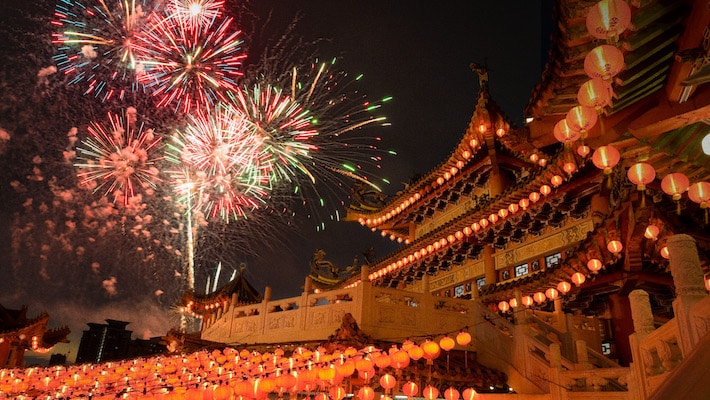
Asian dream interpretation often places great emphasis on timing. Dreams occurring at specific moments, such as before major festivals, during certain lunar phases, or after emotionally significant days, are believed to carry stronger meaning.
For example, dreams during the lunar new year, before weddings, or after funerals are often taken especially seriously. The timing adds symbolic weight, suggesting that the dream is connected to transition, renewal, or closure.
This sensitivity to timing reinforces attentiveness. Dreams are not evaluated in isolation but in relation to life circumstances and cosmic cycles.
Dreams as Practical Guidance
While dreams are often spiritualised, many Asian cultures also view them as practical guidance. Dreams may prompt people to be cautious, avoid certain actions, reconcile with others, or prepare for change. Even when the interpretation is symbolic, the response is often practical.
For instance, a dream about loss may encourage saving money or strengthening relationships. A dream about abundance may inspire gratitude or generosity. In this way, dreams function as subtle advisors rather than fixed predictions.
This pragmatic approach keeps dream interpretation grounded and relevant to everyday life.
Why Dreams Still Matter in Modern Asian Societies
Despite modernisation and scientific advancement, dreams remain culturally significant in many Asian societies. While interpretations may now coexist with psychological explanations, the respect for dreams has not disappeared.
Dreams continue to offer emotional insight in fast-paced environments where people may struggle to process stress consciously. They provide space for reflection in cultures that value balance and awareness.
Even younger generations often consult elders, online forums, or cultural references when encountering vivid dreams. The belief that dreams reveal something meaningful persists because it resonates with lived experience.
Dreams as a Language of the Subconscious and the Sacred
At their core, dreams matter in Asian cultures because they are believed to speak a language that words cannot. They express truths that logic may miss and emotions that waking life suppresses. Whether interpreted spiritually, emotionally, or symbolically, dreams are treated as meaningful communications rather than noise.
This respect comes from an understanding that not all knowledge is rational or visible. Dreams remind people to listen, reflect, and remain humble in the face of forces larger than themselves.
Conclusion: Why Asian Cultures Continue to Honour Dreams
Asian cultures take dreams seriously because they are seen as bridges between inner and outer worlds, between past and future, between the living and the unseen. Dreams are believed to carry wisdom, warnings, comfort, and insight, shaped by centuries of philosophy, spirituality, and collective memory.
Rather than asking whether dreams are real or imaginary, many Asian traditions ask what they reveal and how they should be responded to. This approach encourages attentiveness, reflection, and respect for the unseen dimensions of life.
In a world increasingly driven by speed and certainty, this ancient respect for dreams offers a reminder that meaning often arrives quietly, in symbols, during moments of rest.